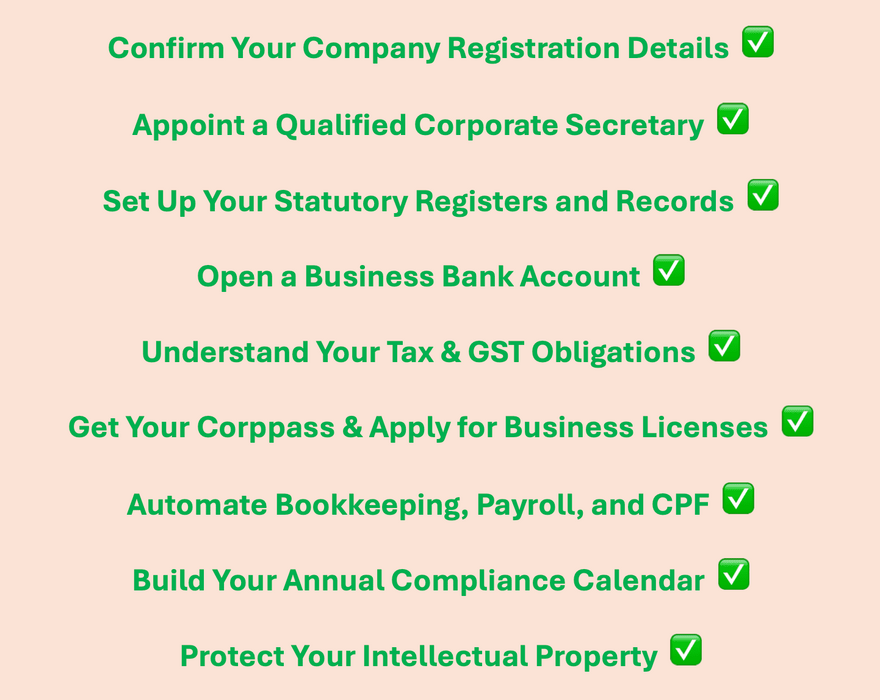
If you’ve spent any time researching the best place to launch a business in Asia, you’ve heard the pitch: Singapore is the easiest place in the world to do business. You read stories about companies being incorporated in fifteen minutes and low tax rates that make founders in Europe or the US weep with envy.
And here is the thing: on paper, those stories are true. At Savvy Platform, we’ve worked with enough international founders to know that there is a massive gap between legal theory and operational reality.
When you’re a foreigner, the "fifteen-minute" setup often turns into a month-long marathon of paperwork, bank interviews, and compliance checks. Why? Because the system isn't designed to be hard; it's designed to be structured. If you don't follow the structure, the friction starts.
In this comprehensive guide, we’re going to walk through what actually happens on the ground when you decide to start a company in Singapore. We'll look at the hidden bottlenecks, the requirements that often catch founders by surprise, and the pragmatic steps you need to take to move from a "registered entity" to a "functioning business."
The Gap Between Expectation and Reality
The "Singapore Dream" for entrepreneurs is often sold as a frictionless, purely digital experience. While Singapore's government infrastructure is world-class, there is an inherent complexity when you are an offshore founder.
Why does Singapore look so easy on paper? Because for a local Singaporean with a Singpass (the national digital identity), the process truly is instant. For a foreigner, however, you are an unknown variable in a system that prides itself on security and transparency.
The friction you encounter isn't a sign of bureaucracy; it's a sign of a robust regulatory environment. At Savvy Platform, we see founders get frustrated when things don't happen "instantly," but the reality is that real-world coordination, especially regarding banking and local representation, takes time.
Can a Foreigner Really Start a Company in Singapore?
The short answer is yes. Singapore is highly open to foreign investment, and the authorities allow 100% foreign ownership of a local company. However, you cannot do it fully independently if you are sitting at a laptop abroad.
The Companies Act requires every Singapore-incorporated company to have at least one locally resident director. This is the first major "reality check" for most founders. A "local resident" is defined as a Singapore Citizen, a Permanent Resident (PR), or an EntrePass/Employment Pass holder.
Unless you already have a partner on the ground, you will likely need to engage a Nominee Director service. We find that many founders initially view this as a simple administrative fee, but it is a significant legal relationship that requires trust and clear documentation on both sides.
The Basic Legal Structure: Why Pte. Ltd. is the Default
While you could theoretically explore Branch Offices or Representative Offices, 99% of the foreign founders we assist at Savvy choose the Private Limited Company (Pte. Ltd.).
- Separate Legal Entity: It is its own "person" in the eyes of the law. It can own property, enter into contracts, and sue or be sued.
- Limited Liability: Your risk is limited to the capital you put into the company. Your personal house, car, and savings are shielded from business debts.
- Credibility: In the Asian market, a Pte. Ltd. suffix carries weight with suppliers and venture capitalists.
- Minimum Requirements: You only need one shareholder, one local director, one company secretary, and a physical registered address (no P.O. boxes).
Step 1: Preparing Your Decisions
The decisions you make before filing are the ones that either speed you up or lead to a two-week delay.
Choosing a Name
If your name sounds like a government agency or a major bank, or if it uses restricted words like "Insurance," "Legal," or "University," ACRA will flag it for manual approval by an external government body. We suggest having two or three alternatives ready just in case.
The SSIC Code Strategy
The Singapore Standard Industrial Classification (SSIC) code defines your business activities. Choose a code related to "Financial Services" or "Recruitment" without the proper licenses, and your incorporation will be rejected. At Savvy, we help founders select the most accurate codes that reflect their operations without triggering unnecessary red flags.
Shareholding Structure
Foreigners often underestimate the complexity of shareholding, especially if a foreign corporate entity is the shareholder. This requires a much deeper level of KYC (Know Your Customer) documentation, including the identification of the Ultimate Beneficial Owner (UBO).
Step 2: The Incorporation Process in Practice
The actual filing happens via BizFile+, the portal managed by ACRA. If everything is perfect, you get a "Soft Copy" of your Notice of Incorporation and Business Profile within hours.
Why delays happen:
- Identity Verification: The government needs to verify the identity of all directors and shareholders. For foreigners, this often involves third-party verification platforms or notarized passport copies.
- Manual Review: As mentioned, certain business activities require a "human" at the government office to look at your application.
Step 3: The Local Director Requirement
This is perhaps the most misunderstood part of the process. A Nominee Director isn't just a name on a piece of paper; they are legally responsible for the company’s compliance.
The Options:
- A Trusted Local Partner: If you have a co-founder in Singapore, you don't need a service.
- Nominee Director Service: You pay a fee to a firm like us to provide a qualified resident.
- Relocating Yourself: You incorporate first, then apply for an Employment Pass (EP). Once the EP is approved, you can act as the local director.
The Security Deposit: Because the local director takes on personal legal liability for company's potential defaults (like unpaid taxes), almost all professional firms require a refundable security deposit. We emphasize to our clients that this is a protection for the person on the ground, not a hidden cost.
Step 4: Business Bank Account Opening
This is the stage where "easy Singapore" becomes "rigorous Singapore." Opening a business bank account is often harder than the incorporation itself.
What Banks Look For:
- Business Model Clarity: If you can't explain how you make money in three sentences, the bank will likely reject you.
- Proof of Business: They want to see contracts, invoices, or a professional website.
- Founder Background: They will Google you. They want to see that you have experience in the field you are entering.
- Transaction Flows: Which countries are you sending money to and receiving it from?
Physical vs. Digital: Traditional banks (DBS, OCBC, UOB) usually require a face-to-face or video interview. Digital-first options are faster but may have limitations on international wire transfers or currency support. We guide founders through this by preparing their "Bank Pitch Deck" to ensure they look like a low-risk, professional outfit.
Step 5: Ongoing Compliance (What People Forget)
Success in Singapore isn't just about the launch; it’s about the maintenance. Once you are live, the clock starts ticking on your legal obligations.
- The Corporate Secretary: You must appoint one within six months. They are the gatekeepers of your Registers and Minutes.
- Annual General Meetings (AGM): Even if it’s just you, you must hold an AGM and file your Annual Returns.
- Tax Deadlines: Estimated Chargeable Income (ECI) must be filed within three months of your financial year-end.
We find that founders who try to DIY this often end up with late fees from ACRA or IRAS. Having a professional Savvy Secretary ensures these dates never get missed.
Immigration and Visas: The Sequence Matters
One of the biggest myths is that incorporating a company gives you the right to live in Singapore. It does not.
The entity is separate from the individual. To relocate, you need an Employment Pass (EP) or EntrePass. The government looks at your salary (there are high minimum thresholds), your qualifications, and whether your company has enough capital to actually pay you. The Sequence: Usually, you incorporate the company first, fund it, and then apply for the visa.
Real Timelines: What it Actually Looks Like
Forget the "15-minute" promise. Here is what we see for foreign founders:
- Phase 1 (Preparation): 3–5 days to get all KYC and notarized docs ready.
- Phase 2 (Incorporation): 1–3 days for approval (if no manual review).
- Phase 3 (Banking): 2–4 weeks for account activation.
- Phase 4 (Operations): By week 6, you are usually fully operational with a bank account and ready to hire.
Common Mistakes Foreign Founders Make
- The $1 Capital Trap: While legal, a bank will not open an account for a company with $1 in capital. It looks like a "shell" company. We recommend starting with at least $1,000 to $10,000.
- Wrong SSIC Code: Choosing "Consultancy" when you are actually doing "Financial Tech" leads to future compliance headaches.
- Underestimating KYC: Not having clear proof of address or certified passport copies ready.
When to Get Professional Help vs. Doing it Yourself
If you are a local resident with a simple business, DIY is fine. But for a foreign founder, the risk of getting stuck at the banking or local director stage is too high.
A professional service like Savvy Platform doesn't just "fill out forms." We act as your navigator through the Singapore system. We provide the resident director, handle the complex secretarial filings, and, most importantly, help you prepare for the bank interview so you don't get rejected.
In conclusion, starting a company in Singapore is a strategic power move. It gives you a gateway to the rest of Asia, a stable legal system, and an incredibly friendly tax environment. But "starting" isn't just about the certificate on the wall; it’s about building a compliant, operational structure that can scale.
The friction isn't your enemy; it’s the filter that keeps Singapore's reputation high. By being over-prepared and understanding the ground reality, you can clear those hurdles quickly.
Ready to bridge the gap between expectation and reality?
Setting up in a new country is a massive milestone, but you don't have to navigate the friction points alone. Whether you need a local director, an SSIC audit, or a compliant secretarial partner to keep the government happy, Savvy Platform are here to help.
Contact us today to get your Singapore journey started the right way.